
The Cloths of Heaven
Characters
The lives, memories, shadows, and echoes woven through The Cloths of Heaven.
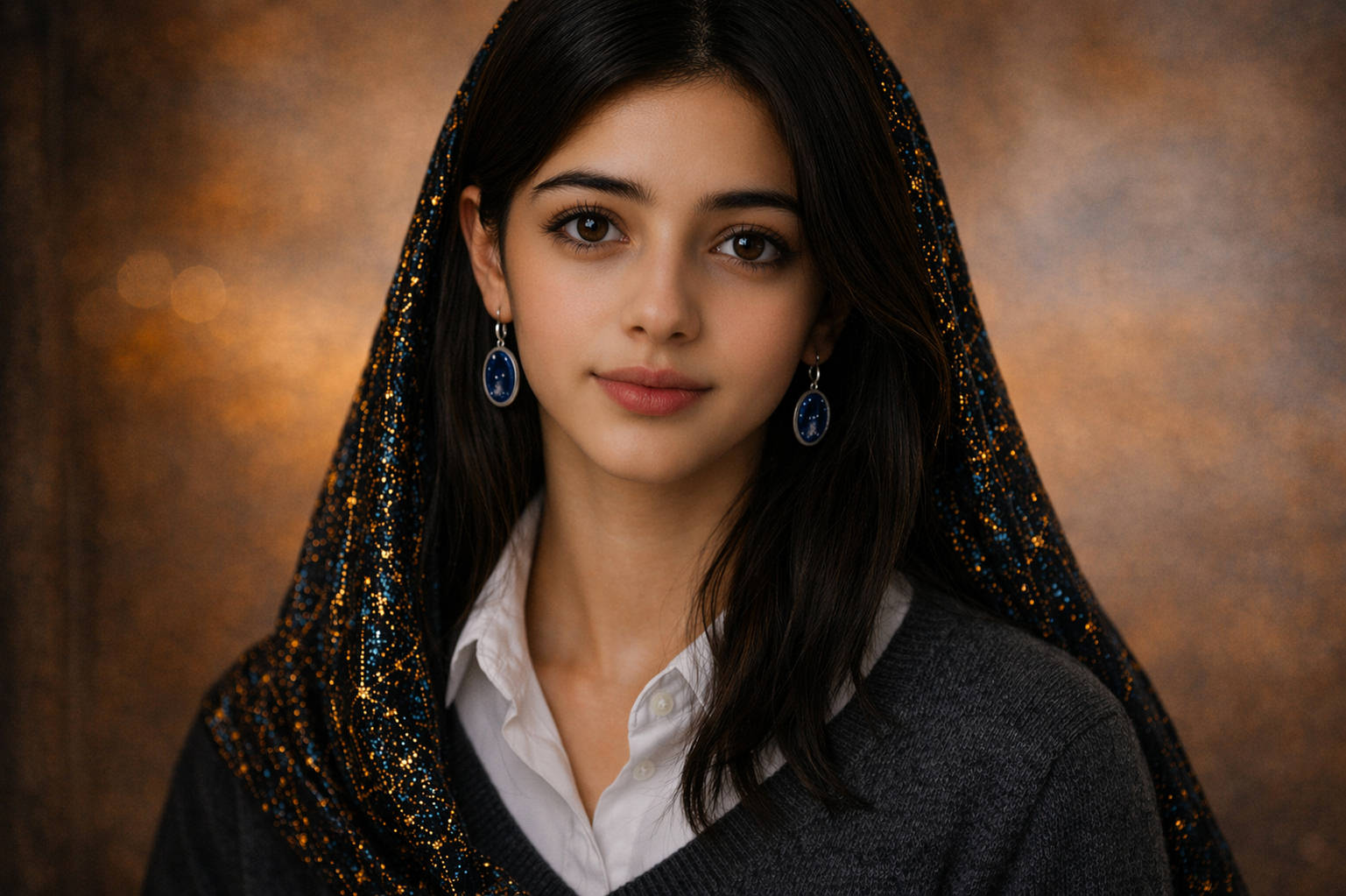
Shezzy
Scheherazade Darkshan Tavassoli
“She danced because some feelings could not survive in silence.”
Shezzy is sixteen years old, the daughter of Iranian immigrants living in a forgotten industrial city in the north of Europe. Quiet, observant, and often unseen within the rigid structures of school and family life, she carries a secret inner world shaped by music, movement, longing, poetry, and stars.
By day, she lowers her eyes and tries to pass unnoticed through corridors of grey concrete and fluorescent light. Yet beneath that softness lies extraordinary emotional force. Dance becomes her private language; the body says what fear and silence will not allow the voice to say.
Her meeting with Alnilam Bauer alters the emotional geometry of both their lives. What begins as recognition between two isolated souls becomes something stranger and more powerful: a bond that seems to resonate beyond ordinary human experience, touching others through kindness, beauty, courage, and the mysterious Ripple Effect.
Shezzy is gentle without being weak, modest without being diminished, and deeply loving without ever becoming merely decorative. She helps turn houses into homes, loneliness into friendship, fear into courage, and grief into light.
In a city built from rust, rain, and forgotten dreams, Shezzy becomes one of its quiet miracles: a girl who seems too pure for the world, yet brave enough to change it.

Al
Alnilam Bauer
“Some people carried silence inside them like weather.”
Al is seventeen years old and lives with his father and older brother in the fading industrial districts of a northern European city where rain, concrete, and old brick seem to remember a vanished age. Intelligent, withdrawn, and emotionally adrift, he moves through the world with the uneasy feeling that something essential is missing.
Raised amid grief, instability, and the long shadow of his mother Aylin’s death, Al learned early how to disappear into himself. Music, astronomy, late-night streets, old records, and forgotten corners of the city became his refuge. Beneath his guarded exterior lies a deeply sensitive soul capable of immense loyalty, tenderness, and wonder.
Al sees beauty where others no longer bother looking: reflections in wet pavement, distant stars above factory roofs, voices hidden inside songs. His love for Shezzy does not make him possessive; it makes him protective, braver, and more alive.
Through Shezzy, Al begins to understand that despair is not the only inheritance available to him. Their connection draws him toward music, friendship, courage, and the strange sense that the Universe may somehow be listening.
In a story of broken families and wounded cities, Al becomes the eyes through which hidden beauty is first recognised, cherished, and defended.

Sally
Salomeja Alcyone Milanova
“Some people entered a room carrying light with them.”
Sally Milanova moves through the world with warmth, intelligence, and an effortless sense of presence that draws others toward her. Raised by Antonio and Clara in a home of humour, music, conversation, and emotional safety, she possesses a rare gift: the ability to make others feel seen without ever demanding the centre of the room.
Bright, perceptive, creative, and quietly formidable, Sally is one of the first people to recognise the hidden radiance inside Shezzy. Their friendship becomes one of the emotional pillars of the story, not from pity or fascination, but from genuine recognition. Sally does not merely befriend Shezzy; she makes room for her, and eventually names her as a sister.
Her love for Sara becomes another expression of that same honesty. Sally’s transition from cosy cardigans and private uncertainty toward confidence, elegance, and young adulthood is never vanity. It is the flowering of someone learning that she may be loved exactly as she is.
Sally carries her father’s wit and her mother’s tenderness. She understands that joy can be serious, kindness can be brave, and small acts of inclusion can change the emotional weather of an entire life.
Within the Ripple Effect, Sally is proof that compassion is not passive. Sometimes light enters the world as laughter, sewing, friendship, terrible jokes, and the courage to say: you belong with us.

Sara
Sara Martins Viana
“Real friendship is a form of shelter against the world.”
Sara Martins Viana brings warmth, music, humour, and Brazilian emotional openness into the lives of the Southern Lights. Intelligent, affectionate, and fiercely loyal, she possesses the rare ability to make people feel accepted exactly as they are, even when they are struggling to accept themselves.
A gifted singer and musician with a rich contralto voice and a natural confidence around performance, Sara expresses love through presence, celebration, rhythm, and practical kindness. Her Brazilian night for Al, Shezzy, and Sally is more than a party. It is a gift: a safe place to sing badly, laugh loudly, become emotional, and be completely unguarded.
Her relationship with Sally is central to the emotional architecture of the later novel. Sara does not orbit the story as a supporting friend; she becomes Sally’s partner, confidante, and equal, helping carry the warmth of the Milanova world into a wider constellation of love and belonging.
For Shezzy, Sara becomes another form of shelter: relaxed, affectionate, unjudging, and alive with music. For Al, she becomes part of the circle that lets him discover friendship without cruelty.
In the half-light of the city, Sara reminds others that human beings survive not only through strength, but through one another — and sometimes through bare feet, karaoke, laughter, and one last perfect night.
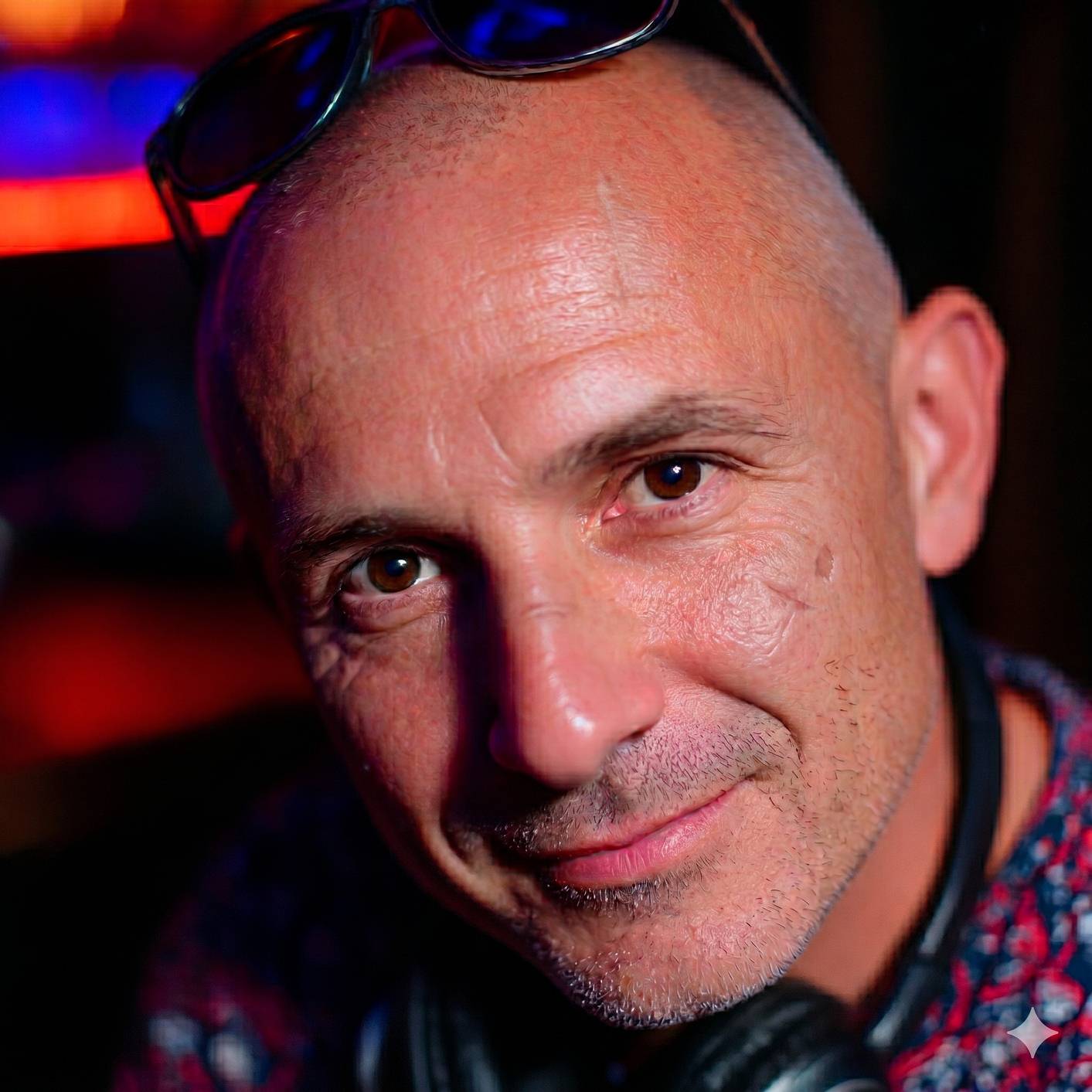
Anton
Taras Antonov
“Beauty is worth defending.”
Taras Antonov, known to many as DJ Anton, arrives like a burst of colour against a grey northern sky: loud engines, flashing lights, music, laughter, Ukrainian flowers, impossible energy, and the theatrical confidence of a man who understands spectacle as a form of love.
Beneath the flamboyance lies one of the great guardians of The Cloths of Heaven. Anton is an artist, mentor, protector, mourner, and former soldier. He recognises wounded young people with uncanny precision and creates spaces where music becomes emotional rescue rather than mere entertainment.
His bond with Al and Shezzy is structurally vital. He opens doors to The Place, nurtures their performances, and sees the danger gathering around them before others fully understand it. The military-grade spray he gives Al is not a minor precaution; without Anton’s foresight, Al and Shezzy may not survive the violence that awaits them.
Anton also carries his own grief through the memory of Aurelia, his lost fiancée, whose ring and absence quietly deepen the flamboyant surface of his character. He knows what love costs, and therefore refuses to treat beauty lightly.
In a city weighed down by rust, fear, and hatred, Anton stands as shield and firework both: the man who brings music to the darkness and is willing to bleed for the children who find light within it.

Antonio
Antonio Milanova
“The future belongs not to machines alone, but to the people wise enough to remain human beside them.”
Antonio Milanova is Sally’s father: an internationally respected AI specialist, a world-class intellect, and one of the novel’s most hopeful visions of technological civilisation. Calm, articulate, and visionary, he views artificial intelligence not merely as engineering, but as a profoundly human question.
Yet Antonio’s brilliance is never cold. He carries success lightly, laughs readily, makes wicked little slagging jokes, plays music too loudly when the moment demands it, and loves Clara with the almost teenage devotion of a man still astonished by his own good fortune.
Within the Milanova household, Antonio helps create an atmosphere of intelligence, humour, abundance, safety, and welcome. He does not speak at young people; he speaks with them. When Al and Shezzy enter his life, he recognises not curiosities or troubled teenagers, but extraordinary souls standing at the edge of a larger future.
His ability to think in systems, emergence, consciousness, and ethical complexity makes him one of the few adults capable of sensing that the strange pattern surrounding Al and Shezzy may be more than coincidence. In this way, he becomes a quiet bridge between the present story and the larger questions that may one day lead toward Alternative Intellect.
Antonio represents intelligence without arrogance, innovation without cruelty, fatherhood without control, and the stubborn belief that humanity’s greatest strength may still be kindness.

Clara
Clara Milanova
“Some people heal the world simply by making others feel loved within it.”
Clara Milanova possesses a rare warmth that transforms every space around her into something calmer, safer, and more human. Intelligent, emotionally perceptive, and quietly radiant, she does not merely offer kindness. She offers belonging.
Professionally accomplished and deeply respected in her own right, Clara combines sharp intelligence with extraordinary emotional intuition. She understands people instinctively: their fears, insecurities, hidden loneliness, and unspoken needs. Yet she never uses that understanding to control. She responds with patience, humour, tenderness, and grace.
Clara and Antonio always wanted a larger family, but nature had other plans. That old, private sorrow makes the arrival of Shezzy, Al, and Sara into the Milanova world especially moving. Around the dinner table, for one luminous evening, the family they never had biologically seems to exist completely by affection.
For Shezzy, Clara becomes a form of maternal shelter without replacing Noor. For Al, she offers a warmth almost unknown to him. For Sara, she becomes part of the welcoming circle surrounding Sally’s love.
In a story filled with rain-dark streets, broken histories, and longing for light, Clara shines with nurturing without possessiveness, wisdom without judgement, and the quiet conviction that every lost child deserves a place at the table.
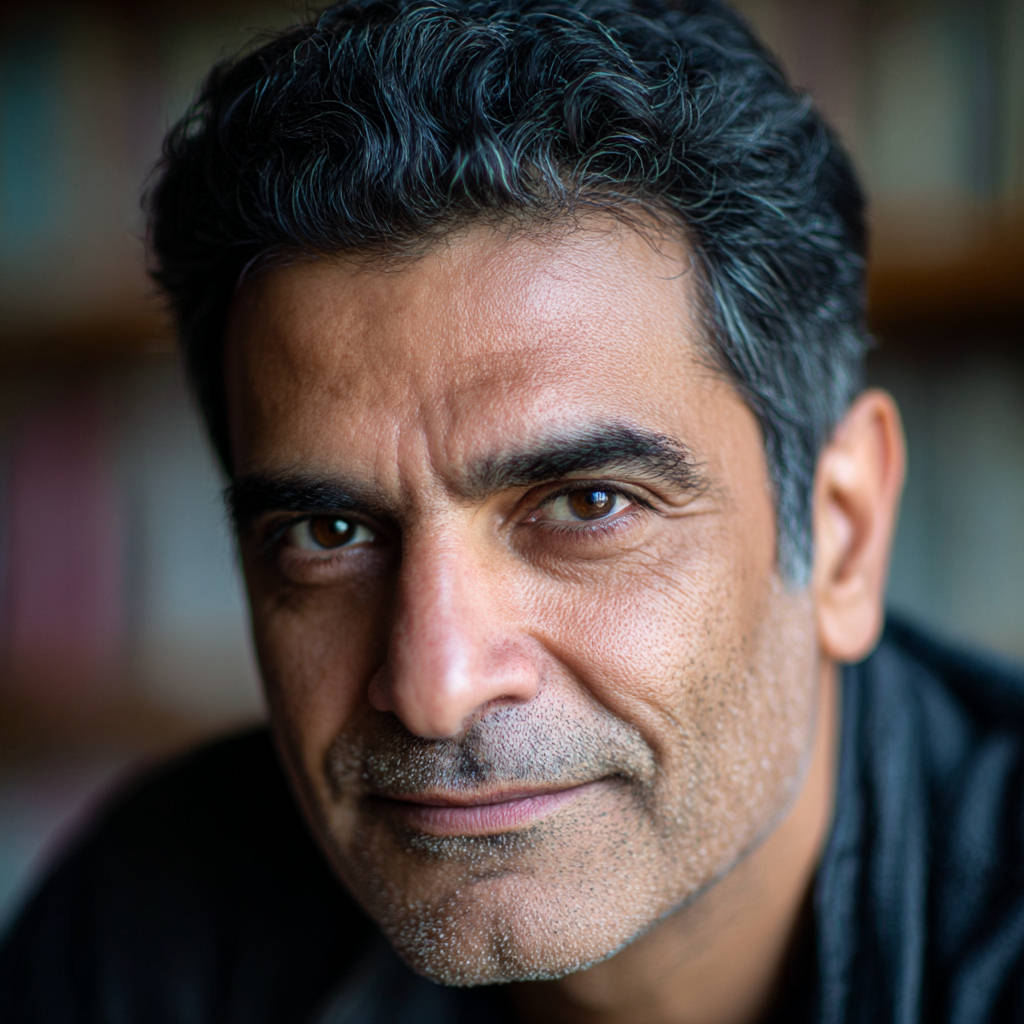
Reza
Reza Tavassoli
“Some men mistake control for love because they fear the world beyond their grasp.”
Reza Tavassoli, Shezzy’s father, is a proud and deeply traditional man carrying the scars of exile, grief, and cultural displacement. Having left Iran after the death of Noor, he clings to family, order, religion, and respectability as anchors against a world he experiences as unstable, hostile, and morally adrift.
In the early story, his fear becomes control. His expectations weigh heavily upon Shezzy, shaping much of her guilt, silence, and emotional conflict. Yet Reza is never simply cruel. Beneath the rigidity lies terror: fear of losing what remains of his family, fear of cultural erasure, and fear that the world will take his daughter as brutally as it took his wife.
His arc becomes one of the novel’s great acts of painful healing. Through crisis, confrontation, Martin’s unlikely parlay, Shezzy’s courage, and the expanding Ripple Effect, Reza begins to understand the difference between protection and possession.
His relationship with Shirin Azadi offers him a second chance at tenderness. In allowing himself to love again, and in allowing Shezzy to live more freely, Reza becomes more than a redeemed father. He becomes evidence that even fear-hardened hearts can soften.
Within The Cloths of Heaven, Reza embodies the collision between tradition and freedom, grief and renewal, control and love — and the possibility that a man may still turn toward light before it is too late.

Martin
Martin Bauer
“Grief can hollow a man slowly, until only echoes remain.”
Martin Bauer, Al’s father, is a man shaped by loss, exhaustion, alcohol, and the slow collapse of the world around him. Once capable of warmth, humour, and ordinary hopes, the death of his wife Aylin left him drifting through life like one of the abandoned industrial ruins surrounding the city.
For Al, Martin represents both wound and warning: a father who loves him, yet for too long cannot properly reach him through the silence of grief. His failures are real, but he is never portrayed as empty of humanity. Beneath the damage remains tenderness, memory, shame, and longing for the family he once had.
Martin’s quiet heroism begins when he stands for Al and Shezzy at the hospital, one of the few adults willing to see clearly and act with moral courage. Later, when Al brings Shezzy home, Martin recognises her immediately as someone precious, not only to his son, but to the household itself.
His line — that she belongs here, with us — marks a profound expansion of family. He is not merely accepting Al’s first love; he is reclaiming his own capacity to welcome, protect, and hope.
In many ways Martin embodies the city itself: tired, weathered, haunted by what has vanished, yet not entirely beyond renewal. Through Al and Shezzy, the memory of love begins moving within him again.

Ray
Ray Calder
“Old souls sometimes carried the deepest music.”
Ray Calder is the owner of Base X, a legendary independent record store hidden among the fading industrial streets of the city. Part philosopher, part old-school rocker, part survivor of a vanished era, Ray has spent his life surrounded by vinyl records, underground music, and the lingering ghosts of youthful rebellion.
Rough-edged, sarcastic, and outwardly cynical, Ray initially appears to embody the exhaustion of the city itself. Yet beneath the leather jackets, dry humour, and carefully cultivated toughness lies deep emotional intelligence and unexpected kindness.
Base X becomes more than a shop. It is refuge: a place where old music still matters, forgotten beauty survives, and lonely souls can briefly feel understood. Ray recognises in Al the same sensitivity and hunger for meaning that once defined his own youth, and he becomes a mentor through music rather than lectures.
His late-found romance with Azada Bakuvi is one of the earliest visible proofs that the Ripple Effect extends beyond the young. Through Azada, Ray rediscovers openness, cultural curiosity, humour, and the possibility that life may still begin again long after one has assumed the best years are gone.
In a city haunted by industrial ghosts and fading dreams, Ray remains stubborn proof that the soul does not necessarily grow old when the body does — especially when the guitars are loud enough.

Shirin
Shirin Azadi
“Some people rebuild quietly, one act of kindness at a time.”
Shirin Azadi is a widowed mother in her mid-thirties who lives in Shezzy’s building, raising her two children with patience, dignity, and quiet resilience. Warm, practical, and emotionally perceptive, she carries the marks of loss without allowing them to harden her heart.
For Shezzy, Shirin’s home becomes one of the gentler spaces within the city: a place of children, ordinary responsibilities, trust, and maternal steadiness. Through babysitting for Shirin, Shezzy glimpses a form of adulthood shaped not by control or fear, but by care and daily courage.
Shirin’s relationship with Reza opens an unexpected path toward healing for both of them. It is not youthful infatuation or convenience, but mature companionship between two people who know grief intimately and still choose warmth.
Her presence helps restore Reza’s ability to love without ruling, and gives Shezzy the joy of seeing her father begin again. When Shezzy presents the engagement rings, Shirin becomes part of a new family structure created by kindness rather than blood alone.
In a city of rain, memory, and second chances, Shirin’s quiet resilience becomes its own form of light.

Azada
Azada Bakuvi
“Some people arrived like music from another world.”
Azada Bakuvi enters The Cloths of Heaven carrying elegance, warmth, and quiet emotional intelligence that immediately alters the atmosphere around her. Originally from Baku, she possesses a calm cosmopolitan grace shaped by culture, travel, resilience, and a deep understanding of human vulnerability.
Where many people move through life guarded or hurried, Azada listens carefully, speaks thoughtfully, and softens emotional tension simply through presence. Beneath her gentleness lies the wisdom of someone who has endured disappointment without allowing bitterness to take root.
Her relationship with Ray Calder becomes one of the story’s most unexpected and joyful Ripple arcs. Through Azada, Ray slowly rediscovers romance, humour, curiosity, and hope long buried beneath cynicism and fatigue.
Their first date is not grand destiny under stars, but something equally precious: two adults walking hand in hand toward music, food, laughter, and perhaps a little legendary rock guitar. They are not pretending to be young. They are discovering that life has not finished with them.
Within the wider emotional landscape of the novel, Azada represents mature love as peace, patience, renewal, and the courage to remain open despite everything life has taken.

Mariatu
Mariatu Sesay
“Quiet courage rarely announces itself. It simply continues shining.”
Mariatu Sesay is one of Shezzy’s classmates at Maple Street School, a thoughtful and quietly self-possessed young woman whose calm presence conceals deep inner strength. Originally from Sierra Leone, she moves through the restless social currents of school life with dignity, warmth, and clear observational intelligence.
Though never among the loudest voices in the room, Mariatu sees more than many others. She understands displacement, belonging, identity, and the loneliness of standing slightly apart. This gives her empathy, but also moral clarity.
Her importance grows as the school atmosphere begins to change. When cruelty and public humiliation threaten Shezzy, Mariatu’s courage helps trigger a decisive turning point. She challenges Nico not with spectacle, but with the quiet authority of someone refusing to let cruelty define the room.
By Chapter 8, Mariatu becomes part of the warmer, more open school world forming around Al and Shezzy. She represents acceptance without performance, friendship without drama, and the possibility that a single act of courage can alter a whole social field.
In a city shaped by rain, memory, and fractured histories, Mariatu carries herself with quiet elegance, already aware that survival alone is not enough. One must also learn how to hope.
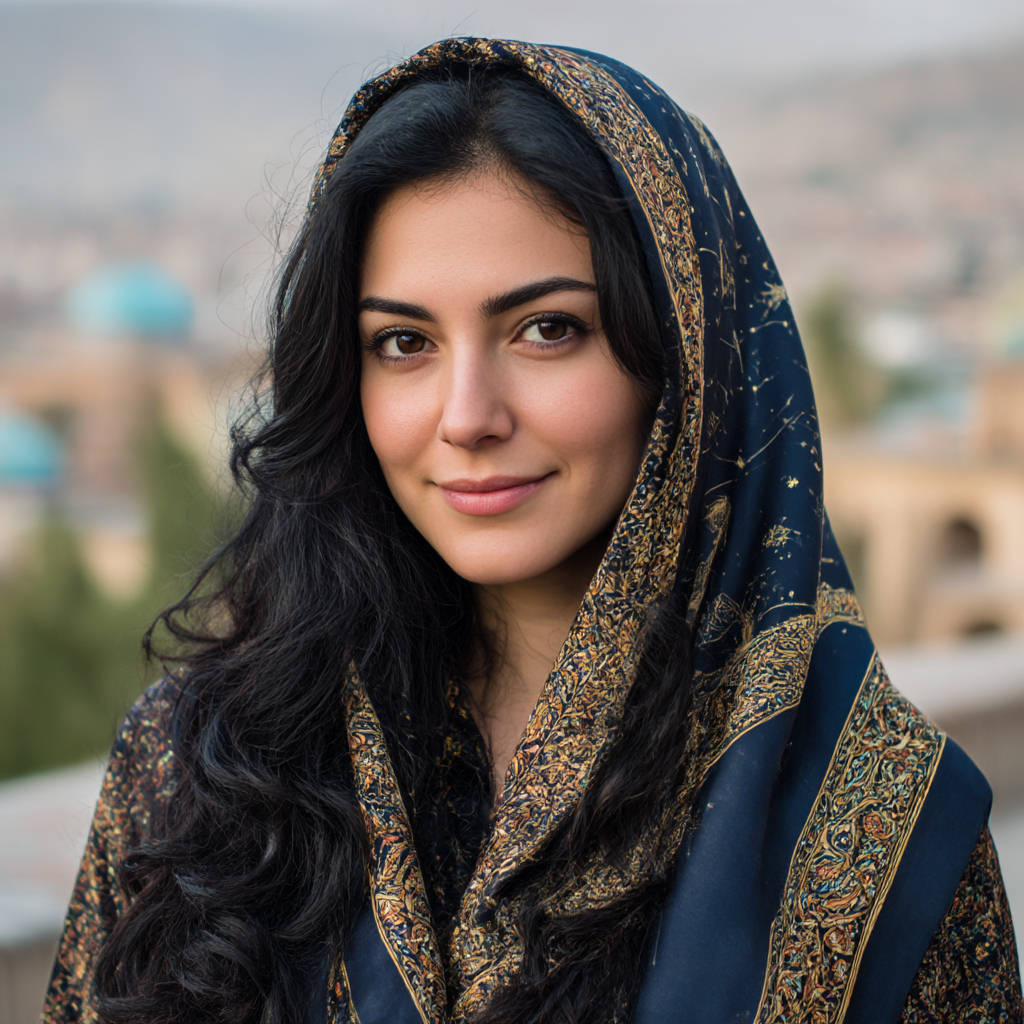
Noor
Noor Darkshan
“Some lights continue travelling long after the stars themselves are gone.”
Noor Darkshan, Shezzy’s mother, exists within The Cloths of Heaven not as a living presence, but as memory, absence, and enduring emotional gravity. More than a decade before the events of the story, Noor died in Tehran at the hands of the state, leaving behind a silence that shapes everyone who loved her.
Though Shezzy was very young when she lost her mother, Noor’s presence lingers within her emotional world: in fragments of memory, inherited gestures, stories half-spoken within the family, and the sense that something beautiful was taken long before its time.
Her name, meaning light, carries profound symbolic resonance. Noor becomes more than a person remembered. She represents lost tenderness, interrupted possibility, and the human capacity for love to survive death, distance, and political violence.
For Reza, Noor is both wound and sacred memory. For Shezzy, she is a distant star whose light still reaches the world. For the novel itself, she becomes part of the deep emotional inheritance from which Shezzy’s gentleness, longing, and strength emerge.
In the long night surrounding The Cloths of Heaven, Noor’s light has never fully gone out.

Aylin (Eileen)
Aylin Demirci
“Love does not vanish. It changes form and continues travelling through the lives it touched.”
Aylin Demirci exists within The Cloths of Heaven as memory, emotional inheritance, and quiet starlight. Originally from Istanbul, gentle, intelligent, and deeply compassionate, she brought warmth into Martin Bauer’s life long before the events of the story begin.
Aylin carried within her a calm fascination with the night sky, the stars, and the hidden beauty of the Universe. Thoughtful and emotionally perceptive, she possessed the rare ability to make others feel safe simply through her presence.
Though no longer physically present, her influence remains woven deeply into Al. His sensitivity, introspection, wonder, and instinct to search for beauty within darkness all carry echoes of the mother he lost far too early.
For Martin, Aylin is the great love whose absence hollowed him. For Al, her memory exists in fragments: soft, distant, incomplete, yet emotionally immense. Her loss wounds the family, but her love continues reaching forward through time.
Within the wider symbolic landscape of the novel, Aylin represents one of its central truths: that even after loss, love continues moving invisibly through the Universe, altering lives long after voices have fallen silent.

Leo
Leo Bauer
“Some people surrendered so completely to darkness that they no longer recognised it within themselves.”
Leo Bauer, Al’s older brother, is a violent, bitter, and deeply destructive presence within The Cloths of Heaven. Lazy, alcoholic, and consumed by anger, he drifts through the city carrying resentment toward almost everyone around him, particularly those he perceives as weaker, different, or emotionally vulnerable.
His abuse of Al is rooted not only in sibling hostility, but in contempt for sensitivity, introspection, and emotional openness. Where Al searches for meaning through music, love, and human connection, Leo embraces aggression, tribalism, and hatred as substitutes for identity and purpose.
Drawn toward racist ideology and violent extremist circles, Leo becomes increasingly involved with the darker forces gathering around Al and Shezzy. In this, he represents one possible future for Al: what grief, social collapse, and masculine insecurity can become when they harden into rage.
Unlike many wounded figures in the story, Leo rarely seeks redemption or self-reflection. He externalises blame constantly, directing his anger outward against immigrants, outsiders, and anyone who threatens his fragile sense of superiority.
In a world struggling toward light, Leo chooses darkness willingly, and his path leads toward exile from the human warmth growing around him.

Majid
Majid Tavassoli
“Pride can become a cage long before the prisoner notices the bars.”
Majid Tavassoli, Shezzy’s older brother, carries himself with the polished confidence of a man determined to appear successful, respectable, and in control. Ambitious, socially aspirational, and deeply conscious of appearances, he measures worth through status, reputation, and approval.
Within the family, Majid occupies a privileged position. Admired by Reza and treated as a source of pride, he uses that favour to reinforce expectations placed upon Shezzy. To him, her dance, emotional intensity, and love for Al are not expressions of identity, but threats to reputation and control.
Yet Majid is more than a simple villain. Beneath the arrogance lies insecurity: the fear that everything he has built, or pretended to build, may be fragile. His judgement of others is partly a defence against confronting the emptiness within his own image of success.
In The Cloths of Heaven, Majid represents respectability without compassion: social vanity, patriarchal entitlement, and the damage caused when family loyalty becomes indistinguishable from control.
Against Shezzy’s authenticity, Majid’s performance of superiority becomes increasingly hollow. In a story shaped by music and light, he reminds us that darkness does not always arrive as open cruelty. Sometimes it arrives dressed as pride.

Nico
Nico
“Charm without empathy quickly reveals itself as something far uglier.”
Nico is one of the most outwardly polished members of Al’s former social circle: stylish, arrogant, and endlessly convinced of his own attractiveness. He presents himself as charming, sophisticated, and irresistible, cultivating the image of a confident ladies’ man wherever he goes.
In reality, Nico’s behaviour is rooted in manipulation, entitlement, vanity, racism, and misogyny. He treats relationships as performances designed to feed his ego, viewing women less as people than as sources of status, validation, or conquest.
Like the rest of Milo’s circle, Nico reacts aggressively to Shezzy. Her quiet dignity and refusal to participate in the group’s cruel games expose the emptiness beneath his self-image. As Al grows closer to Shezzy and further from his former friends, Nico’s hostility becomes increasingly public and vicious.
His attempted humiliation of Shezzy at school becomes one of the story’s social turning points. Mariatu’s challenge helps collapse the audience on which Nico depends. For the first time, the room stops rewarding him.
Within The Cloths of Heaven, Nico represents performative masculinity at its most seductive and hollow: arrogance mistaken for confidence, manipulation mistaken for romance, and social dominance mistaken for worth.

Milo
Milo
“Hatred becomes easy when cruelty is mistaken for strength.”
Milo is the leader of the group Al once called his friends: a toxic, aggressive young man whose influence poisons nearly every environment he enters. Loud, manipulative, and openly hostile toward vulnerability or difference, he thrives on intimidation, humiliation, and the constant performance of dominance.
Within the decaying social landscape of the city, Milo embraces tribalism and toxic masculinity without hesitation. Racist, sexist, and emotionally brutal, he surrounds himself with people who reinforce his worldview, feeding upon resentment and casual violence as substitutes for meaning.
For Al, Milo represents a past he must escape. What once passed for friendship is gradually revealed as coercion, fear, and the suffocating pressure to conform to cruelty. Shezzy’s arrival threatens Milo because she exposes the moral ugliness beneath his authority.
His conspiracy with Leo to organise violence against Al and Shezzy marks one of the darkest turns in the story. Even when events spiral beyond intimidation, Milo’s concern is never conscience, only self-preservation.
Milo is less complex than some antagonists because that is precisely the point. He is moral corrosion without self-awareness: a young man determined to drag others back into darkness because he mistakes fear for respect.

Katy
Ketevan Beridze
“Joy itself can be an act of resistance.”
Ketevan Beridze, known as Katy, brings energy, colour, and restless life into the world of The Cloths of Heaven. Originally from Georgia, she moves through the city with natural confidence, warmth, and youthful charisma.
At school, Katy is impossible to overlook. Beautiful, expressive, and alive with movement, she attracts attention effortlessly, yet beneath the brightness lies genuine kindness. Unlike those who seek popularity through cruelty or exclusion, Katy draws people together.
Music, dance, friendship, and performance form the heartbeat of her world. She helps create moments of joy and social openness within environments too often weighed down by silence, fear, or loneliness.
Though lighter in tone than many figures in the story, Katy plays an important role in the emotional balance of the novel. She widens the constellation of young people around Al and Shezzy and reminds the reader that not every supporting life must be tragic to matter.
In a city of rain-dark streets and industrial ghosts, Katy represents youth at its brightest: playful, passionate, hopeful, and unafraid to shine.